
Why Do Airport Runways Demand a Higher Standard of Fiber Reinforcement?
Few concrete applications face loading conditions as extreme as an airport runway. Every landing delivers a sudden, concentrated impact load, and that same stress repeats thousands of times a year across the same pavement sections. Add temperature extremes, fuel spillage exposure, and the sheer scale of runway construction, and it becomes clear why runway concrete needs reinforcement that goes well beyond standard pavement specifications. As a Macro Synthetic Fiber Manufacturer and PP Fiber Manufacturer, airport and runway construction represents one of the more exacting applications our fiber range is engineered to handle.
The Unique Stress Runways Place on Concrete
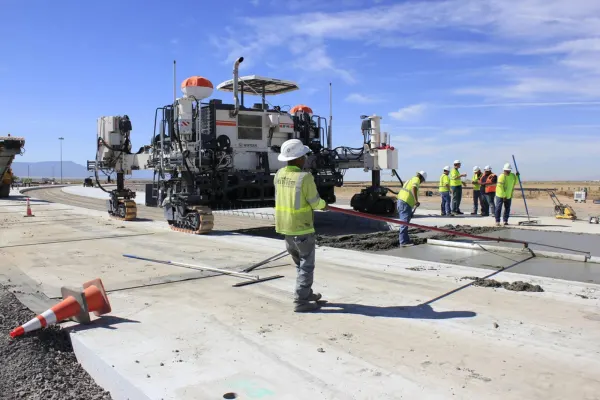
Runway pavement takes repeated, high-magnitude impact loading from aircraft landings, combined with sustained rolling loads during taxiing — a loading pattern quite different from even heavy road traffic. This repeated impact accelerates fatigue cracking, and once even small surface cracks form, they tend to escalate quickly under the sheer force of subsequent landings. Runway concrete is also poured in very large continuous sections, making it highly susceptible to shrinkage cracking during the curing period, before the pavement has even seen its first aircraft.
How Fiber Reinforcement Improves Runway Performance
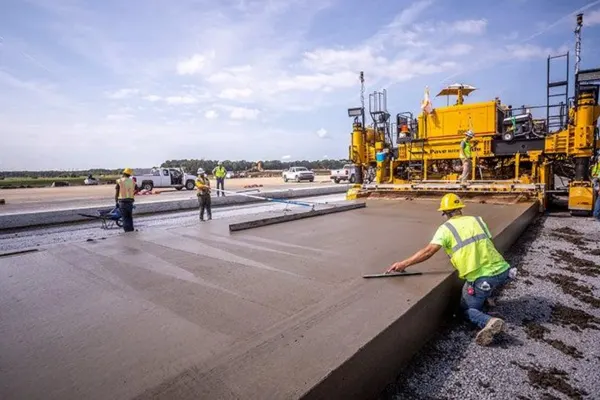
Our PP Micro Fiber Manufacturer products address the early-stage vulnerability, controlling plastic shrinkage cracking across runway pavement’s large pour sections during the critical curing window. For the sustained impact and fatigue loading that runways experience daily, our Macro Synthetic Fiber Manufacturer and Concrete Reinforcement Fiber Manufacturer products contribute genuine structural toughness, helping the pavement resist crack
propagation and maintain load transfer across joints even as micro-cracking begins to develop under repeated aircraft loading. This fatigue resistance is precisely what extends the interval between resurfacing and major runway maintenance, a genuinely significant consideration given how disruptive and costly runway closures are for airport operations.
Being entirely non-corrosive, our fiber range also avoids the degradation risk that fuel exposure and moisture penetration can introduce to steel-reinforced pavement sections over a runway’s long service life.
Working With Airport Infrastructure Contractors
We supply fiber reinforcement for airport and runway construction projects, working with infrastructure contractors to recommend appropriate fiber type and dosage suited to the specific loading and pavement design requirements involved. Given the scale and precision airport projects demand, batch-to-batch consistency is critical — which is exactly why working directly with a manufacturer rather than a reseller matters so much for a project of this nature.
FAQ
Why does runway concrete need different reinforcement than standard road pavement?
Runways experience repeated high-impact loading from aircraft landings, which is considerably more severe than typical road traffic, requiring fiber reinforcement engineered for greater fatigue resistance.
Does fiber reinforcement help reduce runway maintenance frequency?
Yes, by improving resistance to fatigue cracking and shrinkage-related surface deterioration, fiber-reinforced runway pavement generally requires less frequent resurfacing and major repair over its service life.
Is fiber reinforcement effective in areas exposed to fuel spillage?
Yes, since polypropylene and synthetic fiber are chemically inert and non-corrosive, they hold up well in pavement areas exposed to occasional fuel spillage without degrading over time.
Need fiber dosage guidance for a runway or airport infrastructure project? Reach out through our enquiry page or explore our full product range at fiberwellindia.com.