
How Does 12mm Multifilament Polypropylene Fiber Improve Structural Concrete Performance?
Where engineers require more than just shrinkage management and demand some material that would help in providing strength to the concrete structures, 12mm Multifilament Polypropylene Fiber is the ultimate answer. Being a prominent PP Fiber Manufacturer, we manufacture this particular type of fiber which is especially useful when there is a need for providing load-bearing capacity to the concrete besides offering toughness to the concrete.
While monofilament fiber is a single strand of fiber, multifilament fiber is a bundle of many fine and twisted filaments to form a single strand of fiber. Due to the large surface area to diameter ratio, it offers much higher mechanical bonding capability. In plain terms — the concrete grips the fiber harder, and the fiber holds the concrete together better once micro-cracks start to form.
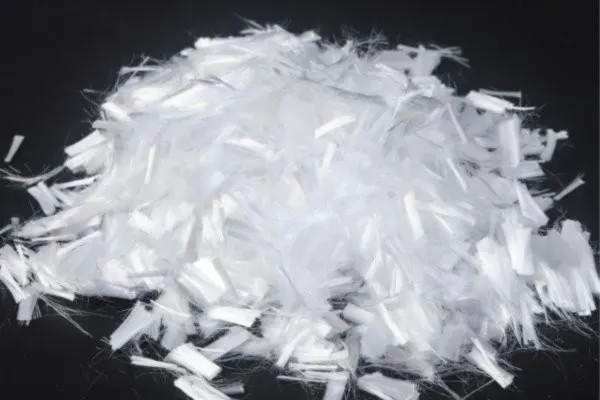
Product Overview
Our 12mm multifilament polypropylene fiber is manufactured entirely from virgin PP micro fiber raw material, meaning there’s no recycled or reprocessed polymer diluting its mechanical properties. Each batch goes through consistent extrusion and cutting processes so that fiber length and filament count stay uniform from bag to bag. As a trusted PP Micro Fiber Manufacturer, we know that inconsistency at this stage is exactly what causes clumping and uneven
dispersion on-site — something we’ve engineered our production process to avoid.
Technical Specifications
| Fiber Structure | Multifilament |
| Brand | Fiberwell |
| Alkali Resistance | Standard |
| Fiber Length | 12 mm |
| Tensile Strength | 500 MPa |
| Melting Point | 160°C |
| Size Classification | Macro |
| Density | 0.9 g/cm³ |
Key Features
This fiber’s twisted multi-strand construction means it disperses more evenly through wet concrete compared to straight fiber types, reducing the risk of “balling” during mixing. It is also completely resistant to corrosion, and thus it is a reliable option for Concrete Reinforcement Fiber Manufacturers where the structure will be subjected to moisture in coastal areas, where otherwise the presence of steel would cause rusting and damage over time. Being light in weight, it does not affect the mix workability in any way.
Recommended Dosage
For general plastic shrinkage crack control, a dosage of around 0.6–0.9 kg per cubic meter of concrete is typically sufficient. In cases where greater structural durability is required, such as industrial floorings or pavement construction, for example, dosage can be increased to 1.2-1.5 kg per cubic meter. We would always advise that you check the dosage required from our technical team depending on your specific needs because parameters like the size of aggregates and amount of cement may require a different dosage.
Mixing Compatibility
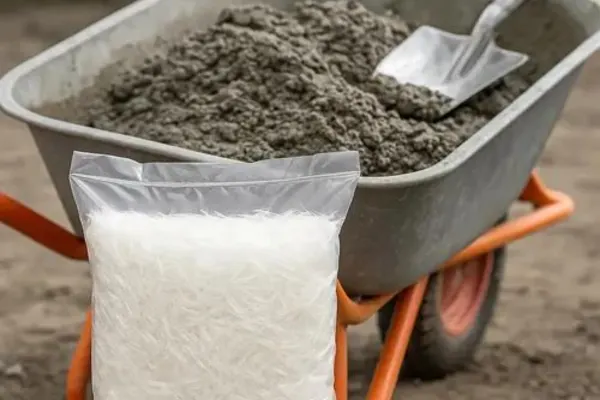
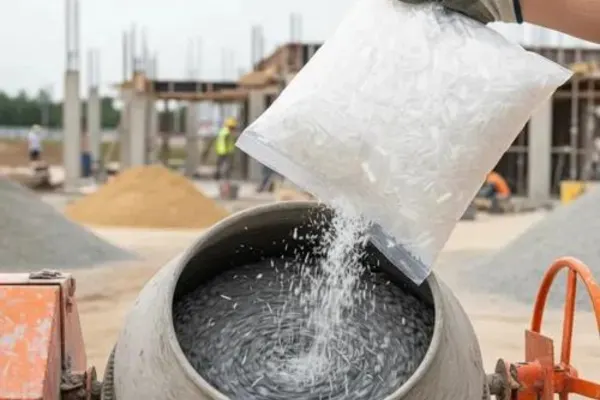
This fiber is compatible with standard ready-mix concrete, site-batched concrete, and precast mixing processes. It can be added directly during the mixing cycle — either at the batching plant or on-site — without needing any special equipment or extended mixing time. It also mixes well alongside other admixtures like plasticizers and accelerators, without any known chemical interference.
FAQ
What's the difference between multifilament and monofilament polypropylene fiber?
Multifilament fiber is made of multiple fine twisted strands bundled together, giving it more surface area for bonding, while monofilament fiber is a single smooth strand, generally used more for basic shrinkage control.
Can 12mm multifilament fiber replace steel mesh entirely?
In many secondary reinforcement applications, yes — though for heavy structural load-bearing elements, it’s often used alongside macro synthetic fiber or as part of a broader reinforcement strategy rather than a complete standalone replacement.
Does adding this fiber affect the concrete's finishing time or workability?
At recommended dosage levels, the impact on workability is minimal, and finishing techniques remain largely unchanged, though slightly longer trowel time may be needed for very high dosages.